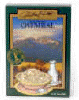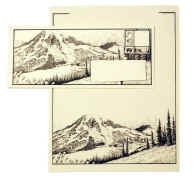
MOUNT RAINIER STATIONERY
In 'Moods of the
Mountain', Sue Koeteeuw writes "The Mountain stands alone.
Its spirit is the very soul of the Pacific Northwest." We
honor this great mountain, Tahoma, that is sacred to the Native
People. Set of stationery and envelopes by artist Gus DeZerega.
25 envelopes and 50 sheets of fine cotton bond paper
$28.
|

MOUNT RAINIER
A
pictorial guide to the 14,410 peak the Indian people called
Tahoma.
$6.95
|
MOUNT RAINIER
"Of all the fire mountains which, like beacons, once blazed along the Pacific Coast, Mount Rainier is the noblest."
John Muir
 In
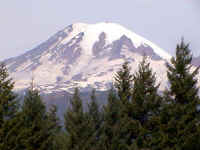
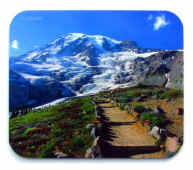
the Puget Sound region of Washington when someone says the Mountain is out,
everyone knows what that means. Cloud-free blue sky with a
giant mound of white visible from all over the state. Which is why Mount Rainier
was chosen to represent Washington on the state's license plates and on newly minted quarters. Mount Rainier
may be the best known image of the Pacific Northwest, along with the Space
Needle. The Mountain is an awe In
the Puget Sound region of Washington when someone says the Mountain is out,
everyone knows what that means. Cloud-free blue sky with a
giant mound of white visible from all over the state. Which is why Mount Rainier
was chosen to represent Washington on the state's license plates and on newly minted quarters. Mount Rainier
may be the best known image of the Pacific Northwest, along with the Space
Needle. The Mountain is an awe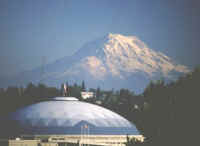 inspiring site no matter how you see it, from the distance, from the air, or up
close while in Mount Rainier National Park. Mount Rainier is on every page of
the Pacific Northwest Shop website as well as our
Mount Rainier Gift Boxes.
inspiring site no matter how you see it, from the distance, from the air, or up
close while in Mount Rainier National Park. Mount Rainier is on every page of
the Pacific Northwest Shop website as well as our
Mount Rainier Gift Boxes.
Mount Rainier National Park
in Washington is one of the oldest parks in the National Park System.
Established in 1899. 235,625 acres (97% is designated Wilderness). Includes
Mount Rainier (14,410'), an active volcano encased in over 35 square miles of
snow and ice. The park contains outstanding examples of old growth forests and
subalpine meadows. The park was designated a National Historic Landmark District
in 1997 as a showcase for the "National Park Service Rustic" style
architecture of the 1920s and 1930s.
Mount Rainier, the highest volcano in the Cascade Range, hovers above more than
2.5 million Washingtonians in the Seattle Tacoma metropolitan area. Mount
Rainier is the most hazardous volcano in the Cascades in terms of its potential
for damage far in excess
of the results of the 1980 eruption of
Mount St. Helens.
 Glaciers
are among the most noticeable and dynamic geologic features on Mount Rainier.
They erode the volcanic cone and are important sources of water for several
rivers, including some that provide water for hydroelectric power and
irrigation. Together with perennial snow patches, glaciers cover about 36 square
miles of the mountain's surface, about nine percent of the total park area, and
have a volume of about one cubic mile. Glaciers
are among the most noticeable and dynamic geologic features on Mount Rainier.
They erode the volcanic cone and are important sources of water for several
rivers, including some that provide water for hydroelectric power and
irrigation. Together with perennial snow patches, glaciers cover about 36 square
miles of the mountain's surface, about nine percent of the total park area, and
have a volume of about one cubic mile.
Glaciers may seem to be static but in fact, they change and flow continuously.
Maximum speeds occur near the surface and along the centerline of the glacier. During
May, 1970, Nisqually Glacier was measured moving up 29 inches per day. Flow
rates are generally greater in summer than in winter, probably due to the
presence of large quantities of meltwater at the glacier base. During periods of
high temperatures in summer glacial melt flows all the way to Tacoma's
Commencement Bay, causing tourists to ask what is causing the giant plume of
reddish-brown water staining the usually clear water.
speeds occur near the surface and along the centerline of the glacier. During
May, 1970, Nisqually Glacier was measured moving up 29 inches per day. Flow
rates are generally greater in summer than in winter, probably due to the
presence of large quantities of meltwater at the glacier base. During periods of
high temperatures in summer glacial melt flows all the way to Tacoma's
Commencement Bay, causing tourists to ask what is causing the giant plume of
reddish-brown water staining the usually clear water.
Whether hiking, climbing to its summit, snowshoeing or cross-country skiing,
camping along its glacier-fed rivers, photographing wildflowers or waterfalls,
or just enjoying the view, millions of people come to enjoy the grandeur and
beauty of Mount Rainier.
click to check out our Mount
Rainier Gift Boxes
|


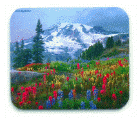
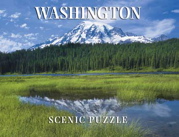
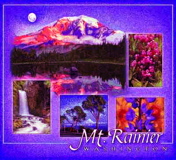
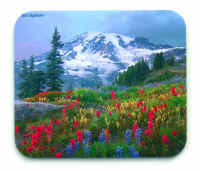


 You
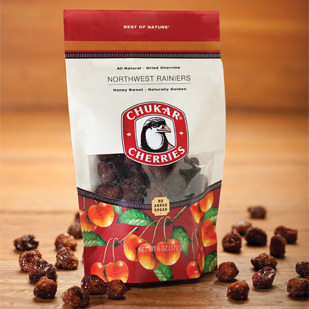
can select the items for your own custom gift box and we
will gift package what you have chosen in one of our exclusive
Mount Rainier gift boxes.
You
can select the items for your own custom gift box and we
will gift package what you have chosen in one of our exclusive
Mount Rainier gift boxes.